
Learning Finnish with Kids at Home
Deborah Laajanen sat her most important Finnish language exam while managing a pregnancy and adjusting to life in a new country. The exam — a prerequisite for law school — required months of intensive study, and she passed it. Anita Anttila's story is perhaps the starkest illustration of what is at stake: a language barrier during her divorce led to her losing custody of her sons. She got them back. Both stories make clear that for parents in Finland, Finnish is never just personal development — it carries real weight in the moments that matter most.
Learning Finnish with children at home is a specific kind of challenge that goes beyond simply being busy. Children restructure your time, your attention, and the noise level of your life in ways that make sustained, focused study genuinely difficult to protect. A language as demanding as Finnish — with its fifteen grammatical cases, vowel harmony, and verb conjugation patterns — rewards consistent, concentrated effort. That is exactly what children make hardest to find.
The difficulties are layered. There is the obvious one: time. A young child's needs are constant and non-negotiable, and any study session can be interrupted or cancelled at a moment's notice. Beyond time, there is cognitive load — the mental energy that goes into managing a household and raising children leaves less capacity for the kind of active language processing that learning requires. Finnish school communication adds another layer: newsletters, WhatsApp groups, parent evenings, teacher meetings — all in Finnish, all expected to be understood, all arriving on the school's timeline rather than yours.
But children also bring Finnish into your home in ways that no classroom can replicate. They pick up the language quickly, often faster than their parents, and suddenly the household has a small native-adjacent speaker in it. Children's books, programmes, and songs become accessible learning material — pitched at a simple linguistic level but embedded in the real emotional texture of family life. There is also the particular motivation that comes from not wanting your child to outpace you in their own home language, or from wanting to be present in their school life in a way that requires Finnish. The stakes are personal in a way that makes the motivation durable.
The disadvantage is that the window for study is narrow and the conditions are rarely ideal. Many parents of young children describe studying in fragments — ten minutes while the child naps, twenty minutes after bedtime, a podcast during the school run. That kind of fragmented exposure can maintain vocabulary and keep the language active, but it rarely produces the deep processing needed to push through a plateau. For learners at an early stage, it can mean progress that feels painfully slow relative to the effort being made.
Anita Anttila arrived in Finland in 1996 as a young mother in a small town near Seinäjoki where there was almost no English spoken and no digital infrastructure to fall back on. She learned Finnish the way you learn something when there is genuinely no alternative — through daily exposure, through necessity, through the accumulation of small interactions over years. She had no language courses in the early period, no app, no tutor. She pointed at things in shops. She listened to conversations. She absorbed what was around her. When a language barrier during her divorce led to her losing custody of her sons because she had signed documents she did not fully understand, the urgency that had always been present became absolute. She got her children back, and she never stopped learning.
Deborah Laajanen's situation was different in almost every practical detail but identical in what it demanded. She arrived from the Philippines in 2021 as a qualified lawyer whose credentials were of limited use without advanced Finnish. She decided to sit the valtionhallinnon kielitutkinto — one of the most difficult Finnish language exams, typically taken by people aiming for government or academic careers — and prepared for it while pregnant. The combination of physical difficulty, emotional pressure, and the demands of preparing for a new child made it one of the more extreme study environments imaginable. She passed, and later earned a place at the University of Helsinki Law School to study a master of laws entirely in Finnish.
What both guests demonstrate is that having children at home does not prevent learning Finnish — it changes the nature of what learning looks like. It becomes less about ideal conditions and more about making use of the conditions that exist. It becomes less about motivation being found and more about motivation being unavoidable. For both Anita and Deborah, the language was not a personal project that happened alongside family life. It was inseparable from it.
3 episodes

 005: From Zero to Finnish Law School in 3 years - Deborah Laajanen
3 years to go from zero Finnish to law school admission. Check out this interview of how Deborah was able to learn such high level Finnish. In this episode, we delve into the inspiring journey of Deborah Laajanen, a lawyer from the Philippines who managed to get accepted into a Finnish law school despite being in Finland for just a few years. Deborah shares her struggles and strategies for learning Finnish to an advanced level, including the use of resources like Suomen mestari, podcasts, and integrating herself into Finnish society. She also discusses the motivation behind her efforts, the role of discipline, and the importance of setting concrete goals. This conversation is a must-listen for anyone facing the daunting task of learning a new language, especially in a new country.Read More


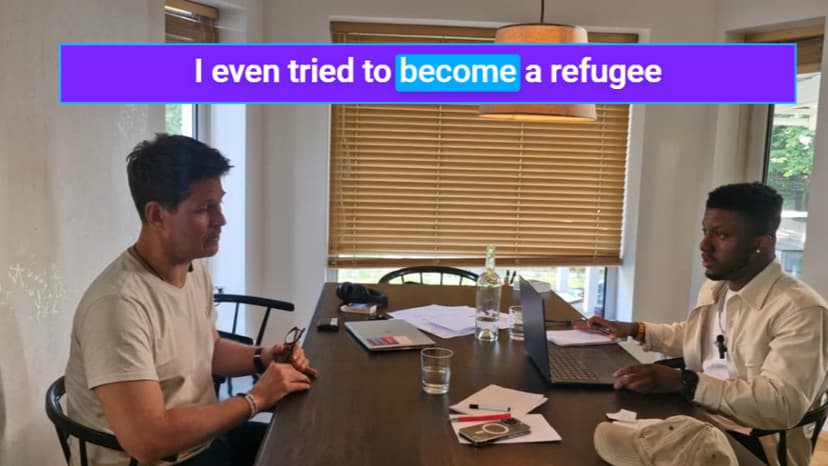
 004: Why Duolingo Failed, Paying for 100 Lunches, and More - Erik
In this episode, we explore Erik's unique approach to learning Finnish through real-world interactions and practical experiences. Erik shares why traditional language learning apps like Duolingo weren't effective for him and how he discovered more effective methods. He discusses his strategy of paying for lunches to practice Finnish with native speakers, the importance of immersion, and how he overcame common challenges faced by adult language learners. This episode is packed with actionable insights for anyone looking to learn Finnish through authentic experiences.Read More
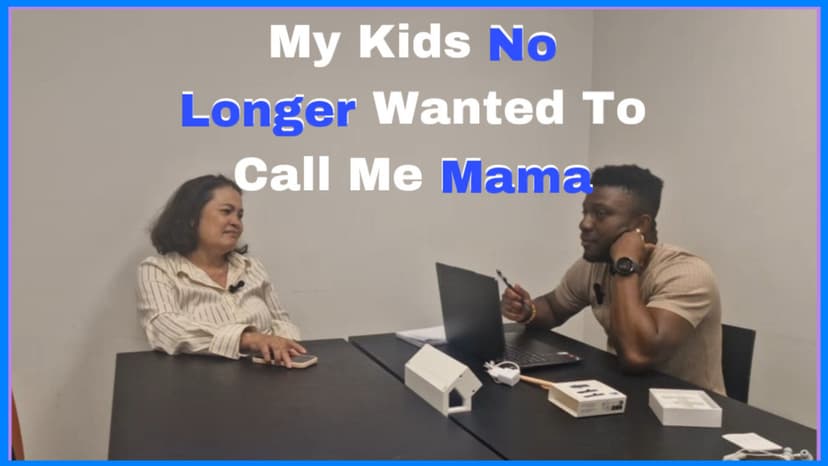
 003: I Lost Custody of My Kids Because I Couldn't Speak Finnish - Anita Anttila
Reasons why you should Learn Finnish. Anita shares her heartbreaking yet inspiring story of how language barriers affected her family life and custody situation. This powerful episode explores the real consequences of not being able to communicate in Finnish, especially when it comes to family matters. Anita discusses her journey to learn Finnish, the challenges she faced in the legal system, and how she eventually regained custody of her children. This episode highlights the importance of language learning beyond just personal development - it can literally change lives and family dynamics.Read More