
Learning Finnish with a Finnish-Speaking Partner
When Chloe Järvinen flew to Helsinki for a weekend to see Finnish rock music, she met the man who would become her husband — and moved to Finland two months later. Living with a Finnish speaker didn't automatically make her fluent, but it gave her a daily classroom she chose to use. Oheneba, the host, had a Finnish girlfriend whose natural corrections became one of his most effective learning tools. Deborah Laajanen married a Finn and eventually passed the valtionhallinnon kielitutkinto and earned a place at Finnish law school. A Finnish-speaking partner is a powerful asset — but only if you treat every conversation as practice.
Having a Finnish-speaking partner at home is often cited as the single biggest advantage a language learner in Finland can have. On paper, the logic is straightforward: you live with a native speaker, Finnish is present in your home every day, corrections happen naturally in conversation, and the language is attached to a relationship that matters to you. That combination — daily exposure, emotional investment, and low-stakes feedback — is exactly what language acquisition research says works best. In theory, it should make learning Finnish almost inevitable.
In practice, it is more complicated. Many people with Finnish-speaking partners never learn Finnish to any meaningful level, or plateau early and stay there. The reason is usually the same: the partner switches to English. Finnish people are often highly proficient in English, and when communication becomes difficult in Finnish, the path of least resistance is to change language. It is easier for both people in the moment, and over time it becomes the default. The learner stops being challenged, the partner stops expecting Finnish, and the arrangement that should have been the greatest asset quietly becomes another reason not to push.
The advantage of a Finnish-speaking partner is access — to the language in its most natural, unguarded form, spoken at normal pace with real vocabulary, embedded in real situations. The disadvantage is dependency and comfort. A learner who gets all their Finnish from one person can end up with a very narrow range — fluent in the domestic register of one individual but uncertain the moment they encounter Finnish in a different context, with different speakers, in higher-stakes situations. The relationship can also make it harder to tolerate mistakes. Being corrected by a stranger in a classroom feels different from being corrected by the person you live with, and some learners find it easier to take risks in Finnish with people they know less well.
Chloe Järvinen flew to Helsinki for a weekend to see a Finnish rock band and left two months later married and living in Finland. Her husband was Finnish, her new life was Finnish, and the language was all around her — but she was clear that none of that made fluency automatic. She had to choose to use Finnish rather than letting her husband carry conversations in English, choose to push through the embarrassment of making mistakes in front of someone she loved, and choose to reject the widely held belief that Finnish is simply too difficult for foreigners to learn properly. That choice — repeated daily over years — is what got her to C1.
Oheneba, the host, had a Finnish girlfriend during the year he committed to speaking Finnish as much as possible. He described her natural corrections as one of the most effective tools he had — not structured feedback but the kind of instinctive response a native speaker gives when something sounds wrong. Hearing "that's not quite how we say it" in the middle of a real conversation, and immediately hearing the right version, is a different kind of learning from reviewing grammar rules after the fact. The relationship created a space where mistakes were safe and corrections were immediate.
Deborah Laajanen married a Finn and used that environment as one part of a broader strategy that also included textbooks, podcasts, and intensive exam preparation. Jamie McDonald — standup comedian and artist, known online as HappeningFish — built his Finnish through a Finnish-speaking household, yoga classes conducted entirely in Finnish, and eventually the extraordinary pressure of performing stand-up comedy in a language he was still acquiring. The audience's reaction told him immediately whether his Finnish had worked or not. There is no sharper feedback loop than that.
What the guests in these episodes share is that they treated the relationship not as a passive resource but as an active one. They made deliberate choices to speak Finnish when English would have been easier, to stay in the discomfort of imperfect sentences rather than switching, and to use the access their partner gave them rather than letting it go unused. A Finnish-speaking partner is not a guarantee of fluency. It is an opportunity — and like most opportunities, it only becomes an advantage when you actually use it.
5 episodes

 013: Living Fully in Finland (Not Just Surviving) - Learning Finnish with Chloe Järvinen
In this episode, I sit down with Chloe Järvinen, a UK-born project manager in the social field who moved to Finland in 2015 after a music-inspired trip unexpectedly changed her life. What began as a fascination with Finnish rock led to marriage, relocation, and ultimately a deep commitment to learning the language. Chloe explains why mastering Finnish became non-negotiable for her independence and sense of belonging. She shares what genuinely helped her progress, what completely missed the mark, and why some popular learning materials can actually demotivate learners without proper guidance—while offering practical alternatives that worked better for her. We dive into mindset shifts, rejecting the 'Finnish is impossible' narrative, setting small tangible goals, leveraging passive exposure in daily life, and navigating serious setbacks without giving up. This conversation isn’t just about learning a language. It’s about building a life—and how Finnish expanded Chloe’s confidence, career opportunities, and connection to the society around her.Read More



 012: Stand-Up Comedy as a Finnish Language Hack - with Jamie McDonald AKA HappeningFish
In this episode of ‘How I Learned Finnish with Ohe,’ I interview Jamie McDonald, a 48-year-old standup comedian and artist, about his journey of learning Finnish. Jamie, who performs under the stage name ‘Happening Fish,’ discusses the challenges and motivations in learning a language spoken by only a few million people. He shares insights into his methods, from taking classes and integrating into Finnish society through family and social circles, to the unconventional approaches of performing standup and attending yoga classes. Jamie also reflects on the emotional hurdles, the importance of persistence, and the cultural immersion necessary for mastering Finnish.. He covers topics such as integrating into Finnish culture, overcoming language barriers in personal and professional settings, and the importance of stepping out of one’s comfort zone to truly master a new language. This episode is filled with humor, valuable insights, and encouragement for anyone looking to learn Finnish or navigate a new linguistic and cultural environment.Read More

 005: From Zero to Finnish Law School in 3 years - Deborah Laajanen
3 years to go from zero Finnish to law school admission. Check out this interview of how Deborah was able to learn such high level Finnish. In this episode, we delve into the inspiring journey of Deborah Laajanen, a lawyer from the Philippines who managed to get accepted into a Finnish law school despite being in Finland for just a few years. Deborah shares her struggles and strategies for learning Finnish to an advanced level, including the use of resources like Suomen mestari, podcasts, and integrating herself into Finnish society. She also discusses the motivation behind her efforts, the role of discipline, and the importance of setting concrete goals. This conversation is a must-listen for anyone facing the daunting task of learning a new language, especially in a new country.Read More
 004: Why Duolingo Failed, Paying for 100 Lunches, and More - Erik
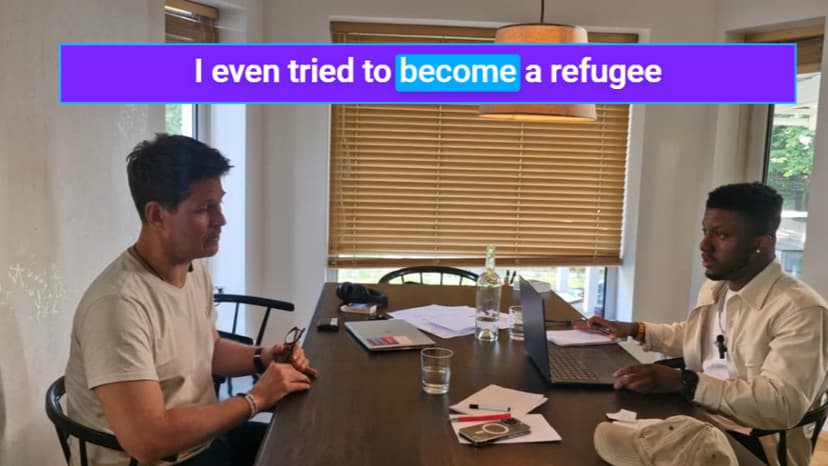
In this episode, we explore Erik's unique approach to learning Finnish through real-world interactions and practical experiences. Erik shares why traditional language learning apps like Duolingo weren't effective for him and how he discovered more effective methods. He discusses his strategy of paying for lunches to practice Finnish with native speakers, the importance of immersion, and how he overcame common challenges faced by adult language learners. This episode is packed with actionable insights for anyone looking to learn Finnish through authentic experiences.Read More
 002: How I Achieved Fluency in Finnish in Just One Year
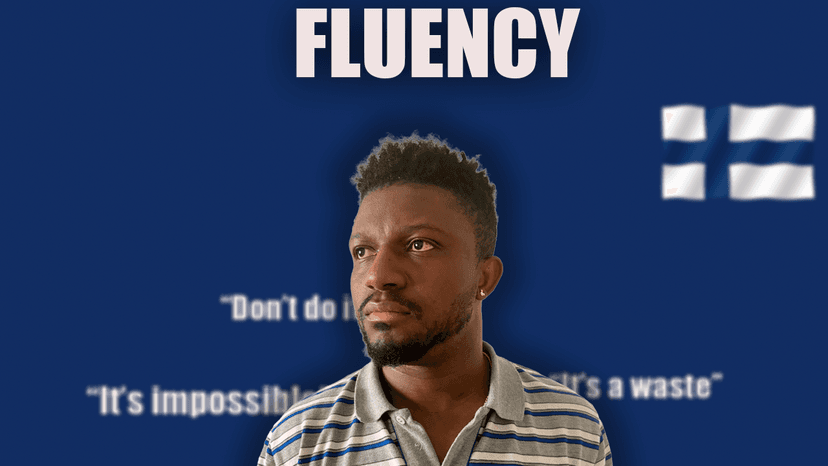
In 2022, I embarked on a radical experiment — I pretended not to speak English for an entire year in order to immerse myself in Finnish and reach fluency as an adult. My journey of mastering the Finnish language in just one year starting from a weak level! How to learn Finnish language easily. From setting specific targets and creating a language immersion environment to utilizing podcasts, books, and articles, I provide actionable tips that can help you learn any language. Learn about the six essential components of language learning—vocabulary, speaking, listening, grammar, reading, and writing—and discover how I kept myself motivated, and adapted my strategies along the way. Whether you're starting from scratch or looking to refine your skills, this video is packed with valuable advice for achieving your language learning goals.Read More
Explore other topics
Learning Finnish as a Parent
3 episodes →
Learning Finnish as a Student
5 episodes →
Learning Finnish Without a Finnish-Speaking Partner
4 episodes →
The Full Journey: From A1 to C Level Finnish
10 episodes →
Breaking the Intermediate Plateau: From B1 to C Level
1 episode →
Learning Finnish Through Immersion
11 episodes →
Fast-Paced Finnish Learning
5 episodes →