Fast-Paced Finnish Learning
Matthias memorised over a thousand Finnish words before arriving in Finland, then reached fluency within a year at university. Oheneba committed to an intensive year of Finnish-only communication in 2022 and was fluent enough to land a new job partly because of his Finnish by that summer. Jojo Pratt spent his first year in a refugee camp — with no English safety net — and came out fluent. These timelines are real, and the guests are specific about what made the difference: not talent or shortcuts, but an unusually high daily investment in the language, sustained over a long enough period that it became automatic.
Finnish is consistently ranked among the hardest languages in the world for English speakers to learn. The Foreign Service Institute estimates it takes around 1,100 classroom hours to reach professional working proficiency — and that assumes ideal conditions, dedicated study, and consistent practice. Most people in Finland who are learning Finnish while also holding down a job, raising a family, or navigating a new country are nowhere near those conditions. The conventional wisdom is that Finnish takes a long time. For the guests in these episodes, it did not.
The difficulty with learning Finnish fast is not just the language itself — it is the sustained intensity it requires. Moving quickly through a language as structurally complex as Finnish means spending far more time with it than a typical learner does. That level of exposure is hard to maintain alongside a normal life. It is also easy to confuse speed with shortcuts: the guests here did not find a faster route through the language. They simply spent more hours in contact with it, more consistently, over a shorter period of time. That is both the definition of fast-paced learning and its core difficulty.
The advantage of moving quickly is obvious — you reach fluency while your circumstances still favour it. The window for intensive learning is not always open. Matthias arrived as a single student with no dependants and no career yet established in Finland. Oheneba had a year in which he structured his entire life around Finnish exposure. Jojo was in a refugee camp with few other demands on his time and everything to gain from learning the language. Those windows close. The disadvantage is that sustaining the intensity required for fast progress is genuinely hard, and dropping the pace before fluency is reached can leave you stranded at an intermediate level for years.
Matthias arrived at Aalto University having already memorised over a thousand Finnish words from a vocabulary book he had worked through methodically before leaving Germany. He understood that vocabulary alone would not be enough, so he joined a Finnish-speaking choir — forcing himself into a social environment where Finnish was the only option — and listened to Finnish children's audiobooks for hours at a time to absorb natural speech rhythm. He also conducted his own therapy sessions in Finnish, giving the language an emotional depth that accelerated how firmly it settled. He was fluent within a year of arriving.
Oheneba, the host, made a public commitment on LinkedIn and Instagram to speak Finnish wherever possible for an entire year — effectively simulating the conditions of someone who had no English to fall back on. He built daily habits around Finnish podcasts in subjects he actually cared about, maintained an Excel spreadsheet of new words with definitions and example sentences, created a phrase bank of expressions he used regularly in everyday life and translated them all into Finnish, and read books in Finnish chosen for their subject matter rather than their difficulty. By summer of that year he was fluent enough that his Finnish played a direct role in landing a new job.
Deborah Laajanen went from almost no Finnish to passing the valtionhallinnon kielitutkinto — one of the most demanding Finnish language exams — in roughly three years, and she did so while pregnant and managing a move to a new country. Jojo Pratt arrived in Finland with no Finnish and no English safety net in the refugee camp where he spent his first year. He attended Finnish classes while others skipped them, stood in the hallway to listen when the room was full, and came out of that period with a foundation strong enough to build a career and a fully Finnish-speaking life from.
What separates these guests from slower learners is not aptitude. It is the daily volume of Finnish they put themselves in contact with, and the refusal to treat English as a fallback when Finnish got uncomfortable. Jojo put it plainly: "Nobody can teach you Finnish. You have to learn it yourself. It's all mentality." Every fast-paced learner in these episodes reached the same conclusion by a different route — and the methods they used to get there are specific, repeatable, and worth listening to.
5 episodes
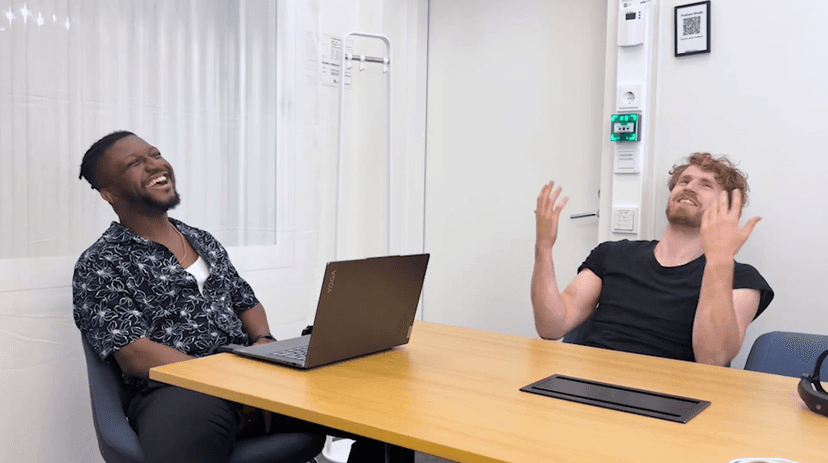
 011: How Immersion, Emotions, and 3,000 Words Made Matthias Fluent - Finnish Language Journey
Starting even before he moved to Finland, Mathias discusses how he memorized 1000+ Finnish words from a vocabulary book and immersed himself in the language. He explains his methods, such as focusing on grammar, practicing speaking with native Finnish speakers, and integrating into Finnish culture through activities like joining choirs. Mathias also reveals unconventional approaches, including conducting psychotherapy in Finnish to deepen his emotional connection to the language. Despite many challenges and the onset of the COVID-19 pandemic, Mathias achieved fluency within a relatively short period by dedicating significant time and effort, employing both systematic and creative learning strategies. His story highlights the importance of persistence, immersion, and making use of emotions in the language learning process.Read More



 010: The Moment I Stopped Resisting: Learning by Lifestyle - Hamed
In this engaging discussion, Hamed, a 43-year-old software engineer originally from Iran, recounts his experiences adapting to life in Finland. Hamed shares his journey of learning Finnish, which was initially challenging due to his temporary mindset and resistance to the language. Eventually, his perspective shifted as he accepted Finland as his new home. Hamed highlights the role of making Finnish friends, listening to music, and immersing himself in Finnish culture as crucial to his language acquisition. He recounts specific experiences, such as working in a multicultural center, participating in language courses, and navigating daily interactions. Notably, he discusses how expressing emotions in Finnish significantly improved his fluency. Hamed emphasizes the importance of mindset, cultural immersion, and having fun in the process of learning a new language. His story provides valuable insights for anyone struggling to learn Finnish or integrate into a new culture.Read More

 009: This One Shift Made Me Fluent in Finnish
In this episode, we explore the transformative power of embracing discomfort to achieve personal growth. Through heartfelt anecdotes and candid reflections, our guest reveals how pushing through initial unease can lead to newfound confidence and freedom. Learn why striving for perfection can actually hinder progress, and how allowing yourself to be imperfect can open doors to more meaningful interactions and self-discovery.Read More

 005: From Zero to Finnish Law School in 3 years - Deborah Laajanen
3 years to go from zero Finnish to law school admission. Check out this interview of how Deborah was able to learn such high level Finnish. In this episode, we delve into the inspiring journey of Deborah Laajanen, a lawyer from the Philippines who managed to get accepted into a Finnish law school despite being in Finland for just a few years. Deborah shares her struggles and strategies for learning Finnish to an advanced level, including the use of resources like Suomen mestari, podcasts, and integrating herself into Finnish society. She also discusses the motivation behind her efforts, the role of discipline, and the importance of setting concrete goals. This conversation is a must-listen for anyone facing the daunting task of learning a new language, especially in a new country.Read More
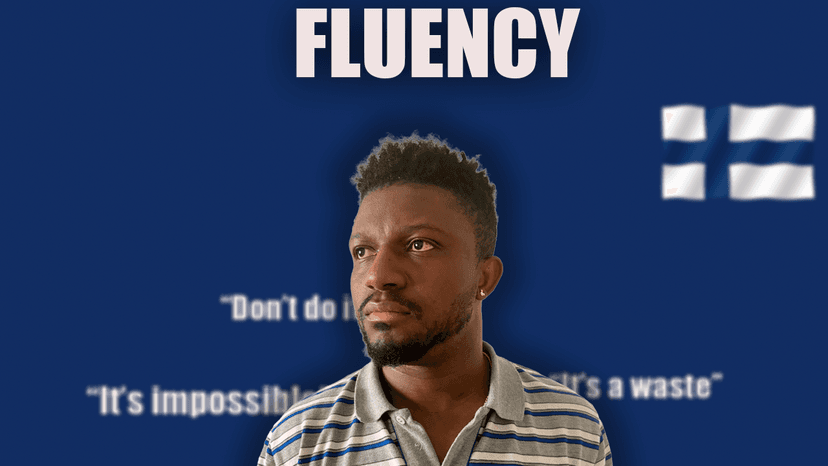
 002: How I Achieved Fluency in Finnish in Just One Year
In 2022, I embarked on a radical experiment — I pretended not to speak English for an entire year in order to immerse myself in Finnish and reach fluency as an adult. My journey of mastering the Finnish language in just one year starting from a weak level! How to learn Finnish language easily. From setting specific targets and creating a language immersion environment to utilizing podcasts, books, and articles, I provide actionable tips that can help you learn any language. Learn about the six essential components of language learning—vocabulary, speaking, listening, grammar, reading, and writing—and discover how I kept myself motivated, and adapted my strategies along the way. Whether you're starting from scratch or looking to refine your skills, this video is packed with valuable advice for achieving your language learning goals.Read More
Explore other topics
Learning Finnish as a Parent
3 episodes →
Learning Finnish as a Student
5 episodes →
Learning Finnish with a Finnish-Speaking Partner
5 episodes →
Learning Finnish Without a Finnish-Speaking Partner
4 episodes →
The Full Journey: From A1 to C Level Finnish
10 episodes →
Breaking the Intermediate Plateau: From B1 to C Level
1 episode →
Learning Finnish Through Immersion
11 episodes →