Learning Finnish Without a Finnish-Speaking Partner
Hamed arrived in Finland from Iran in 2004 with no Finnish-speaking partner and no plan to stay. He found his breakthrough through a friend's Finnish-speaking girlfriend who refused to switch to English with him — "That's exactly why I'm speaking to you, so you'll learn." Emily spent years learning from a Vietnamese-speaking Finnish tutor who could explain the language from the perspective of someone who had also acquired it as a second language. Magdalene built her Finnish through patient interactions at the grocery store and conversations during nursing placements. The absence of a Finnish partner at home just means finding the language somewhere else — and these guests found creative ways to do exactly that.
Not having a Finnish-speaking partner at home is often treated as a disadvantage — and it is, in one specific way. The home is where many learners get their most consistent, low-stakes daily exposure to a language. A Finnish-speaking partner corrects you without making it a lesson, introduces you to vocabulary you would never encounter in a textbook, and creates an environment where Finnish is simply the language of daily life. Without that, you have to find the language elsewhere, and finding it elsewhere requires deliberate effort every single day.
The difficulties are primarily about consistency and correction. Without a native speaker at home, it is easy for Finnish to become something you study in sessions rather than something you live in. You can go entire evenings, entire weekends, without hearing or speaking a word of it. Mistakes go uncorrected. Progress can feel slower because there is no ambient input — no Finnish being spoken around you while you cook dinner or watch television together. You have to build that environment yourself, and building it from scratch takes more intention than inheriting it.
The advantage, though, is real. Learners without a Finnish-speaking partner at home are often forced to be more creative and more independent in how they find the language. They tend to seek out Finnish in their social life, their workplace, their hobbies — because that is the only place it exists for them. That outward reach often leads to a broader network of Finnish-speaking contacts than someone who gets all their Finnish at home and rarely needs to find it elsewhere. The independence it builds also means they are less reliant on one person's patience and more confident navigating Finnish in unfamiliar situations.
Hamed spent years in Finland without a Finnish-speaking partner, and for a long time the language barely progressed. The turning point came not from a course or a textbook but from a friend's Finnish-speaking girlfriend who simply refused to switch to English when speaking with him. "That's exactly why I'm speaking to you," she told him, "so you'll learn." He kept a notebook of words he kept hearing around him — including vocabulary he found in the junk mail ads that came through his letterbox, which he appreciated because they were short, contextual sentences that came with pictures. He also listened to Finnish music, particularly older songs with clear pronunciation, and built his vocabulary through the rhythm and repetition of lyrics.
Emily came to Finland as an international student and spent years keeping Finnish at a comfortable distance. When she finally committed to learning properly, she found that formal classroom settings did not work for her — the timing clashed with her schedule, and the feedback loop was too slow. What worked was a private tutor who spoke both Vietnamese and Finnish: someone who could explain Finnish grammar not as a native speaker but as someone who had also learned it from the outside. She could ask questions that a Finnish teacher might not anticipate. Later, Emily began using AI tools to proofread her written Finnish, asking for B2-level corrections and working through the feedback herself.
Magdalene Awahnde built her Finnish through the environments her life already took her into — grocery shops, church, the nursing placements that were part of her retraining. She spoke to patients in Finnish before she was fully comfortable doing so, made mistakes, and kept going. Kseniia worked with Russian-speaking Finnish teachers who could bridge the gap between her native language and Finnish, and pushed through the discomfort of real conversations rather than waiting until she felt ready. Anita Anttila, who arrived in Finland in 1996 in a small town where almost nobody spoke English, had no choice but to find Finnish in the world around her from the very first week.
What connects these guests is that none of them waited for the right conditions. They found the language in their social circles, their workplaces, their communities, and their daily routines — and they stayed in contact with it long enough for it to become familiar. Not having a Finnish-speaking partner at home is a real gap, but it is one that can be filled in other ways, and sometimes the effort of filling it actively produces a more well-rounded fluency than relying on a single source.
4 episodes

 010: The Moment I Stopped Resisting: Learning by Lifestyle - Hamed
In this engaging discussion, Hamed, a 43-year-old software engineer originally from Iran, recounts his experiences adapting to life in Finland. Hamed shares his journey of learning Finnish, which was initially challenging due to his temporary mindset and resistance to the language. Eventually, his perspective shifted as he accepted Finland as his new home. Hamed highlights the role of making Finnish friends, listening to music, and immersing himself in Finnish culture as crucial to his language acquisition. He recounts specific experiences, such as working in a multicultural center, participating in language courses, and navigating daily interactions. Notably, he discusses how expressing emotions in Finnish significantly improved his fluency. Hamed emphasizes the importance of mindset, cultural immersion, and having fun in the process of learning a new language. His story provides valuable insights for anyone struggling to learn Finnish or integrate into a new culture.Read More



 007: I Didn't Wait To Be Included, I Learned The Language To Belong - Magdalene
Join us for an inspiring conversation with Magdalene Awahnde, a nursing manager in Finland. In this episode, Magdalene shares her journey from Cameroon to Finland, her challenges and triumphs in learning the Finnish language, and her rise in the healthcare sector. Discover her key strategies for overcoming language barriers, her motivational tips for aspiring immigrants, and how her determination and positive attitude opened doors to remarkable opportunities. Magdalene's story is a testament to the power of perseverance and the importance of embracing opportunities. Don't miss this insightful and motivational episode!Read More

 006: Stop Saying It's Too Hard, That's Why You're Stuck - Emily
Meet Emily, an entrepreneur and hairdresser who shares her unique strategies, challenges, and experiences that shaped her language-learning process. In this episode, we dive deep into Emily's journey of learning Finnish. From studying abroad to integrating into Finnish society, Emily covers essential topics like vocabulary building, speaking, listening, grammar, reading, and writing. She also discusses the importance of mindset, staying motivated, and leveraging resources like podcasts, books, and online platforms to master Finnish. Learn how Emily overcame the hurdles of learning a new language and how you can apply her insights to your language-learning journey.Read More
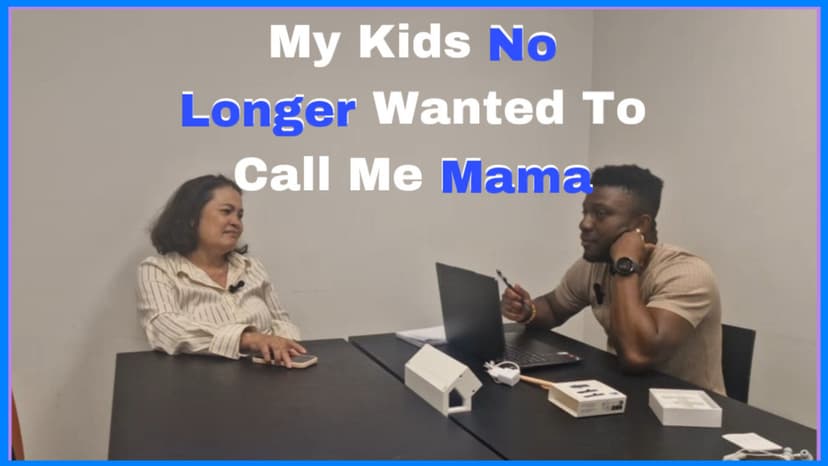
 003: I Lost Custody of My Kids Because I Couldn't Speak Finnish - Anita Anttila
Reasons why you should Learn Finnish. Anita shares her heartbreaking yet inspiring story of how language barriers affected her family life and custody situation. This powerful episode explores the real consequences of not being able to communicate in Finnish, especially when it comes to family matters. Anita discusses her journey to learn Finnish, the challenges she faced in the legal system, and how she eventually regained custody of her children. This episode highlights the importance of language learning beyond just personal development - it can literally change lives and family dynamics.Read More
Explore other topics
Learning Finnish as a Parent
3 episodes →
Learning Finnish as a Student
5 episodes →
Learning Finnish with a Finnish-Speaking Partner
5 episodes →
The Full Journey: From A1 to C Level Finnish
10 episodes →
Breaking the Intermediate Plateau: From B1 to C Level
1 episode →
Learning Finnish Through Immersion
11 episodes →
Fast-Paced Finnish Learning
5 episodes →